Source soft suede steering wheel cover for cars, trucks, and SUVs
Compare 30 listings for the soft suede steering wheel cover featuring materials like PVC and leather with customizable colors and logos. Buyers can evaluate specifications including universal fitment and packaging options from suppliers in China.
Key considerations
Products List






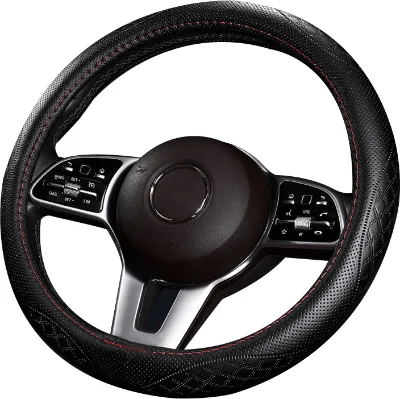


Comprehensive Sourcing Guide
Strategic Sourcing Guide for Soft Suede Steering Wheel Covers
The automotive interior accessories market has seen a sustained shift toward premium tactile experiences, with soft suede steering wheel covers emerging as a high-demand category for both aftermarket upgrades and original equipment manufacturer (OEM) specifications. For procurement professionals, sourcing these components requires a nuanced understanding of material composition, regulatory compliance, and supply chain logistics. While the core keyword suggests a specific texture, the actual product landscape often blends suede-like finishes with synthetic alternatives like PVC, PU, and genuine leather. This guide provides a disciplined framework for evaluating suppliers, verifying technical specifications, and mitigating procurement risks associated with this category.
Material Composition and Technical Specifications
The primary differentiator in steering wheel cover sourcing is the material matrix. While the search term specifies "soft suede," market data indicates a complex mix of materials often marketed under similar sensory descriptions. Buyers must distinguish between genuine suede, which is derived from animal hide, and synthetic alternatives such as PVC, PU, and microfiber blends that mimic the suede aesthetic. The supplied product facts reveal a diverse material landscape where "PVC" and "Leather/PVC/PU" are listed as major materials, alongside "Genuine leather" and generic "Other" material classifications.
When evaluating technical specifications, the buyer must scrutinize the exact material type. For instance, a product listing may claim "Genuine leather" while the technical data sheet lists "PVC" as the primary component. This discrepancy often points to a composite construction where the core is synthetic, and the surface is treated to feel like suede. Key specifications to verify include the diameter, which typically ranges around 430mm for universal fitment, and the number of spokes or structural elements that affect the cover's drape and fit. The "All-match" attribute suggests a universal design, yet the "Car Fitment" data explicitly lists specific brands like Audi, BMW Brilliance, and Aachen Schnitzer, indicating that some SKUs are tailored for specific vehicle architectures.
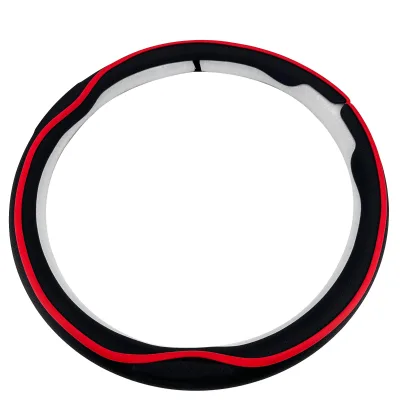
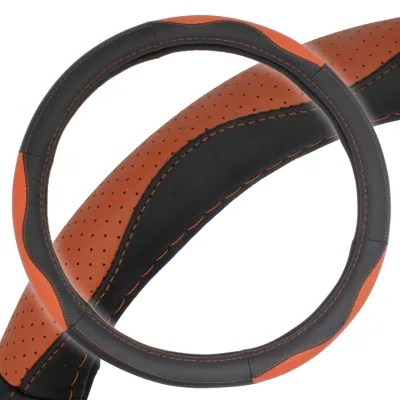
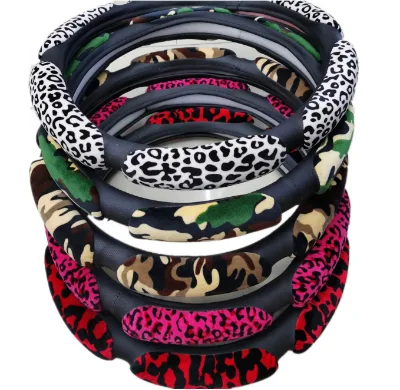
Furthermore, the physical dimensions of the packaging and the product itself are critical for logistics planning. Observed single package sizes can reach 45x42x8 cm, with a single gross weight of 0.550 kg. These metrics directly influence freight costs and warehouse storage requirements. Buyers should also note the "Color" options, which range from standard hues like "Red Black" and "Black" to specialized tones such as "Shaohua Apricot" and "Wine Red." The availability of "Customized Color" and "Custom Logo" attributes confirms that these products are highly customizable, a factor that significantly impacts the Minimum Order Quantity (MOQ) and lead time.
Compliance, Certification, and Regulatory Standards
Navigating the regulatory landscape for automotive interior components is essential for avoiding customs delays and ensuring product safety. The supplied facts highlight specific certifications, such as "GS" (Geprüfte Sicherheit), which is a German safety certification indicating that a product meets rigorous safety standards. However, the presence of a "GS" certification on one SKU does not guarantee that all products in the category possess this status. Buyers must verify the certification for each specific model number, such as 105029 or SL010B, before placing an order.
In addition to product-specific certifications, the "prod_standard" field lists "Unverisal" and "Export Standard." These terms are generic and require clarification. "Export Standard" generally implies compliance with international shipping and packaging norms, but it does not substitute for specific automotive safety regulations like those mandated by the Department of Transportation (DOT) in the US or the ECE regulations in Europe. Buyers should explicitly request test reports for flammability, toxicity, and slip resistance, as these are critical for interior components that come into direct contact with the driver.
The "Place of Origin" data points to major manufacturing hubs in China, specifically Zhejiang and Guangdong. While these regions have robust manufacturing ecosystems, the "prod_standard" being listed as "Unverisal" suggests a need for the buyer to define their own quality benchmarks. Relying solely on the supplier's claim of "Export Standard" is insufficient. Procurement teams should mandate that suppliers provide third-party laboratory test results for the specific batch of goods, ensuring that the materials used do not release harmful volatile organic compounds (VOCs) under heat or friction.
Cost Drivers and Pricing Dynamics
The pricing structure for soft suede steering wheel covers is influenced by a combination of material costs, customization levels, and order volume. The observed price range in the market spans from $0.90 to $5.59 USD. This wide variance is not merely a reflection of brand value but is heavily driven by the material composition and the degree of customization. Products listed with "Genuine leather" or "GS" certification will naturally command a price at the higher end of this spectrum, while those made from "PVC" or "Other" materials with standard packaging will fall toward the lower end.
Minimum Order Quantity (MOQ) is another significant cost driver. The data shows an observed MOQ range of 1 to 1000 units, with specific listings citing 200PC or 1000PC as thresholds. The "MOQ: 1000PC" constraint is common for custom logo and color orders, as the setup costs for dyeing and printing are amortized over larger volumes. Conversely, the "MOQ: 200PC" option may apply to standard SKUs with pre-existing designs. Buyers must calculate the total landed cost, including the unit price, freight, and duties, to determine the true cost per unit. For example, a low unit price of $0.90 may become uncompetitive if the MOQ of 1000 units results in excessive inventory holding costs for a small business.
Payment terms also play a role in the financial dynamics of the transaction. The "T\T" (Telegraphic Transfer) term is noted in the supply data, which is a standard but requires careful management of cash flow. Buyers should negotiate payment milestones that align with production progress, such as a deposit upon order confirmation and the balance before shipment, to mitigate the risk of non-delivery.
Supplier Evaluation and Verification Protocols
Selecting the right supplier requires a rigorous vetting process that goes beyond the information provided on a product page. The "Brand Name" field in the data includes entries like "SMARLION" and "ANMA," but these should be treated as product lines rather than guarantees of corporate stability. Buyers must verify the legal entity behind the brand and confirm their physical location. The "Place of Origin" is listed as "Zhejiang, China" and "Guangdong, China," which are distinct provinces with different industrial focuses. Zhejiang is known for general manufacturing, while Guangdong often has a stronger focus on automotive components.
A critical aspect of supplier evaluation is the verification of the "Customization" capabilities. The data confirms that "Customization" is available and "OEM Logo" is accepted. However, the buyer must assess the supplier's capacity to handle these requests. This involves reviewing their design team's proficiency, their ability to source specific raw materials for custom colors, and their track record with previous custom orders. The "prod_packing" attribute lists "40days" for some items and "Cartons" for others, indicating variability in lead times. A 40-day production window suggests a complex customization process, whereas standard items may ship faster.
Buyers should also inspect the "Single package size" and "Single gross weight" to ensure the supplier's packaging aligns with their logistics strategy. The listed dimensions of 45x42x8 cm and weight of 0.550 kg are specific data points that must be validated against the actual shipment to avoid discrepancies in freight calculations. Additionally, the "Selling Units" being listed as "Single item" suggests that the supplier is willing to sell in small quantities, which is beneficial for sampling but may not be scalable for bulk procurement.
Quality Control and Inspection Procedures
Implementing a robust quality control (QC) strategy is paramount when sourcing steering wheel covers. The "prod_standard" of "Export Standard" is a baseline that must be elevated by the buyer's specific requirements. Quality inspections should focus on several key areas: material consistency, stitching integrity, and color accuracy. Given the "Color: Optional" and "Customized Color" attributes, color matching is a frequent point of failure. Buyers should require a physical color sample approval before mass production begins.
The "Material" variations, including "PVC," "Leather," and "Genuine leather," necessitate different inspection protocols. For leather products, the inspection should check for grain consistency, absence of cracks, and proper tanning. For PVC and PU products, the focus should be on the uniformity of the texture and the durability of the surface coating. The "number of spokes: 4" attribute indicates a specific design element that must be inspected for symmetry and structural integrity.
Inspection frequency should be determined by the order volume and the supplier's historical performance. For orders exceeding 1000 units, a third-party inspection during the production phase and a final random inspection before shipment are recommended. The "prod_packing" of "Cartons" implies that the packaging itself must be durable enough to protect the product during transit. Buyers should verify that the packaging includes moisture barriers and cushioning to prevent damage to the soft suede or leather surface.
Long-Term Procurement and Supply Chain Resilience
Sourcing soft suede steering wheel covers is not a one-time transaction but a long-term relationship that requires strategic planning. The "prod_model" data lists numerous SKUs, from 105018 to SL022, indicating a diverse product portfolio. Buyers should aim to consolidate orders across multiple models to leverage volume discounts and simplify logistics. The "Car Fitment" data, which includes specific brands like Audi and BMW, suggests that buyers can target specific vehicle segments to build a focused inventory.
Lead time management is another critical consideration. With "prod_packing" times listed as "40days" for some items, supply chain disruptions can have a significant impact. Buyers should maintain a safety stock of popular SKUs and establish backup suppliers to mitigate risks. The "payment: T\T" term requires a stable financial relationship, and buyers should consider diversifying payment methods if possible to improve cash flow flexibility.
Finally, the "Customization" aspect offers a competitive advantage for buyers who can offer unique products to their customers. However, this requires a deep understanding of the customization process and the ability to manage the associated costs and lead times. By carefully evaluating the material, certification, and supplier capabilities, buyers can build a resilient supply chain that delivers high-quality soft suede steering wheel covers while maintaining cost efficiency and compliance with global standards.
FAQs
What materials are used for soft suede steering wheel covers?
Products are constructed from PVC, genuine leather, or blends of leather and PU. The material type varies by model, with some listings specifying PVC as the major component while others list genuine leather.
Which certifications are available for these steering wheel covers?
Some models carry GS certification indicating safety compliance. Buyers must verify this status for specific model numbers like 105079 as not all items in the category share this certification.
How does the minimum order quantity affect pricing?
MOQs range from 200 to 1000 pieces depending on customization. Custom logo and color orders typically require 1000 units, while standard SKUs may be available at lower quantities.
Can buyers request custom colors and logos?
Yes, customization is available for both colors and OEM logos. Buyers can select from options like red black or wine red, and request custom branding on the product.
Where are these steering wheel covers manufactured?
Products originate from manufacturing hubs in Zhejiang and Guangdong, China. The specific location depends on the supplier and the model number associated with the order.
What are the typical packaging dimensions for these items?
Single packages often measure 45x42x8 cm with a gross weight of 0.550 kg. Packaging types include OPP packs or cartons depending on the specific product listing.